

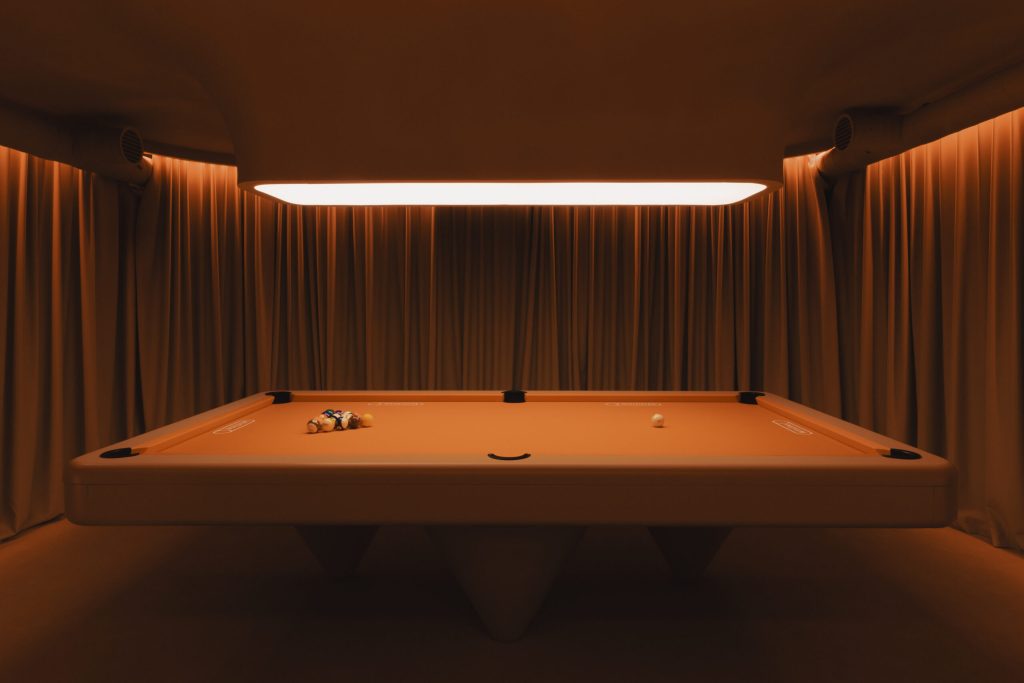
A billiard club, a cocktail bar, and a menu of sexy junk food inside a 19th-century building. Four rooms, each with its own character. This is not your grandfather’s pool hall.
There is a particular type of new venue that arrives not with a press release but with a mood. The kind that spreads person to person, neighbourhood to neighbourhood, until it simply becomes the place you go. Billie, tucked on Neglinnaya Street a stone’s throw from Trubnaya metro, is exactly that kind of place.
The founders are Oleg Tsoy, Pasha Nitsa, and Misha Pugachev, the same trio behind the well-regarded Moscow restaurant Soma. They brought in designer Georgy Aygunyan to shape the space, and chef Artem Chudnenko to run the kitchen. The result is a project that carries the ambition you’d expect from people who have already built one room that Moscow talks about, and applies it somewhere nobody had thought to look.
“We love billiards,” Oleg Tsoy explains, “but the idea was a little more cunning than that. We’re certain that people today need new formats for leisure. Places where it’s not just a single product or service that matters, but the overall mood and concept. How the guest feels inside. People are no longer just looking for somewhere to go. They’re looking for a community where they feel comfortable.”
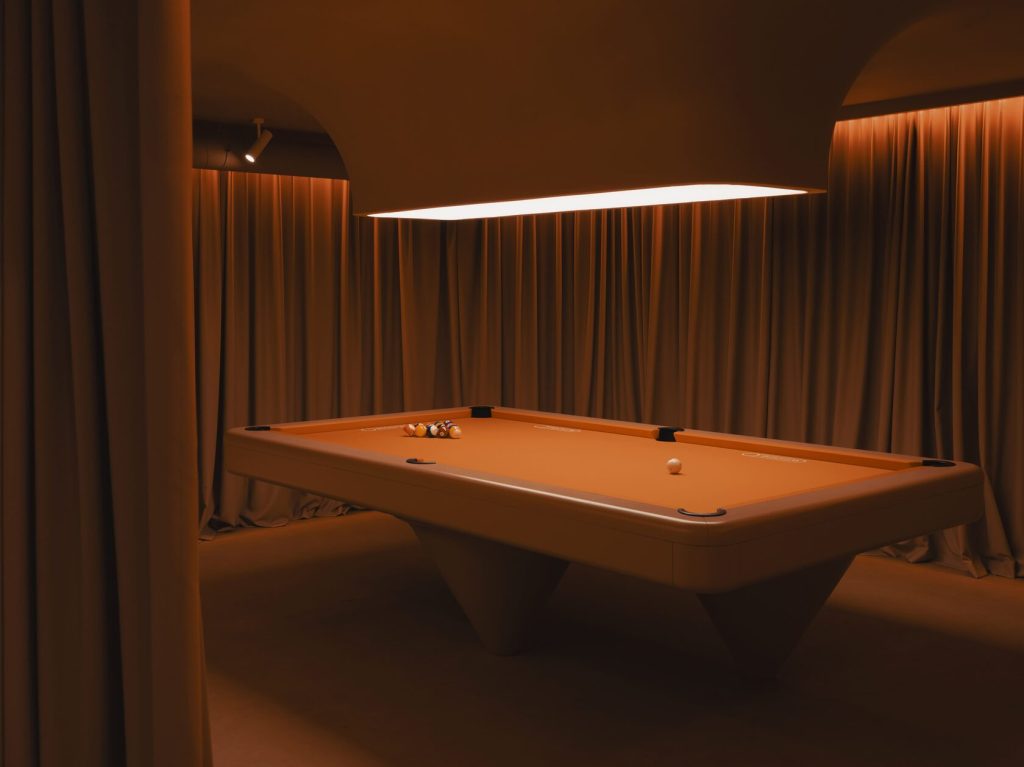
On the surface, it is a billiard club. Four rooms with tables for American pool and Russian billiards, the game you’d expect. But the moment you step inside, the premise of the traditional pool hall dissolves entirely. The space reads like a minimalist fever dream: pale tones, architectural lighting, soft geometry, and a stillness that feels closer to a gallery than a sports club. The game itself, as Oleg puts it, became “not the goal, but the instrument” through which something new was made possible.
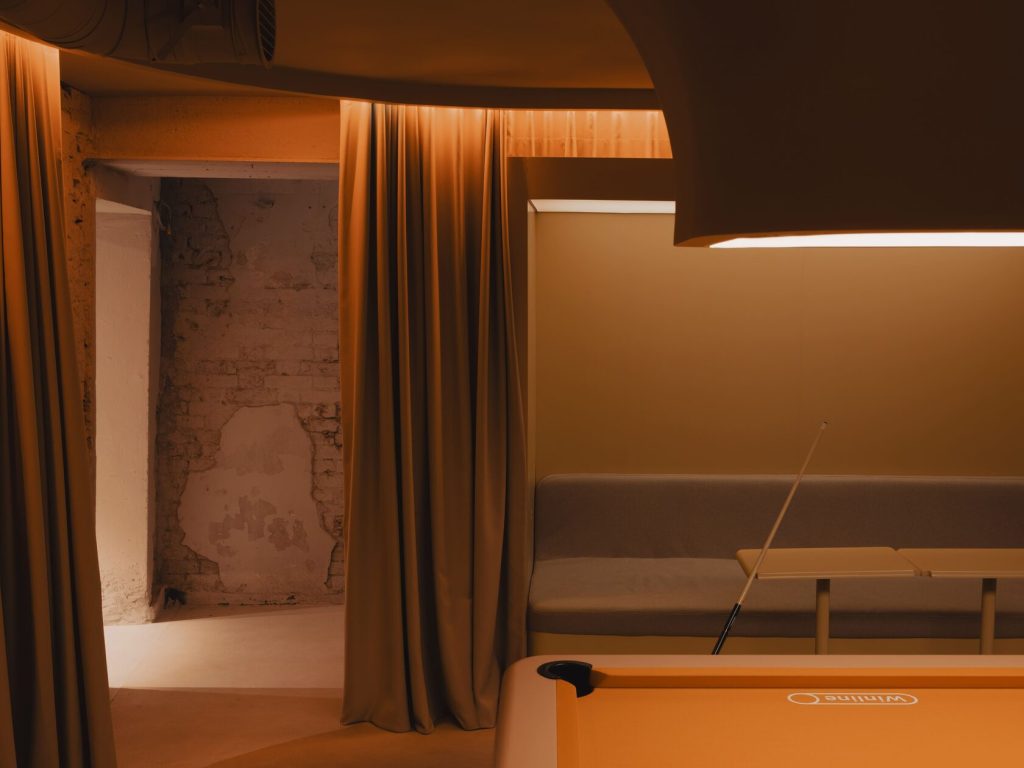
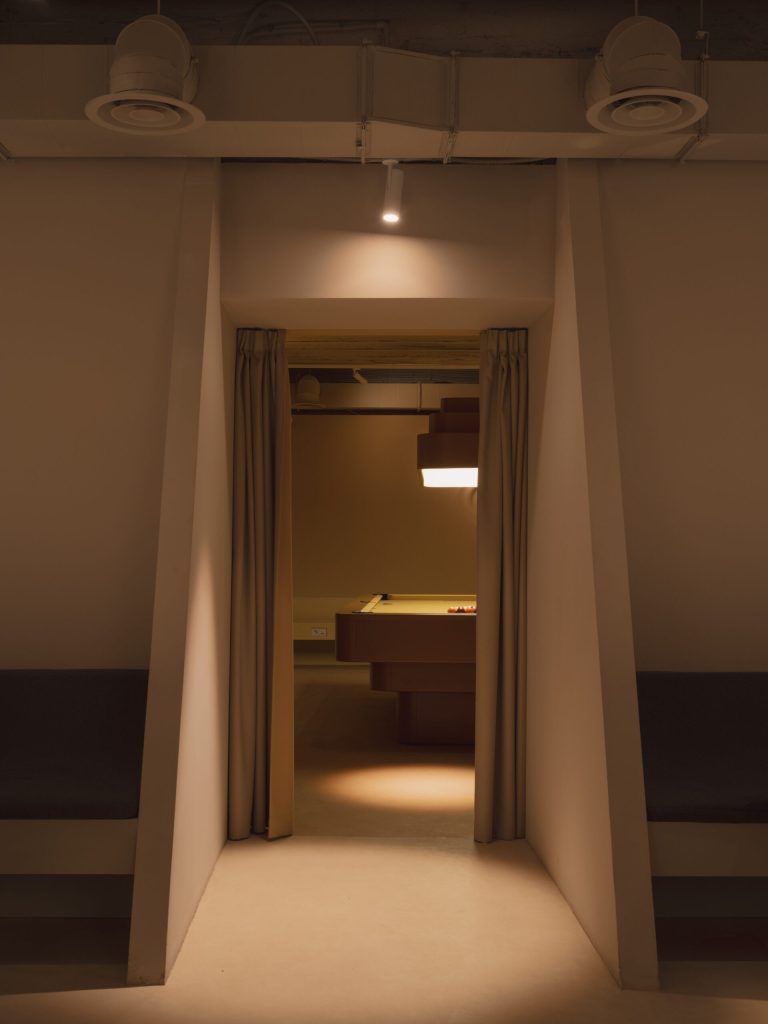
The interior is the work of Moscow-based designer Georgy Aygunyan. The building itself handed him an extraordinary starting point: a 19th-century structure that once formed part of the estate of the Pegov family, its historical walls carrying the weight of another era entirely. Aygunyan chose not to erase that history but to set it in conversation with something radically contemporary
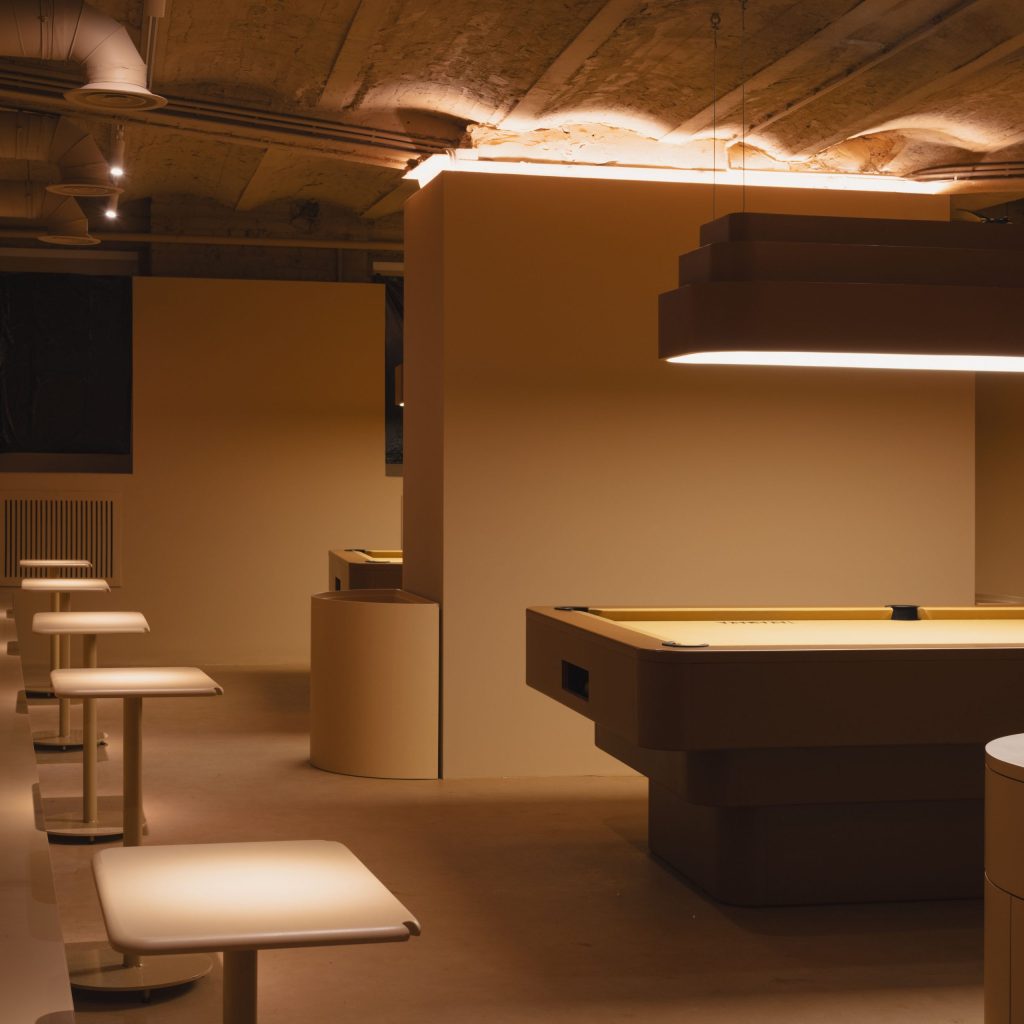
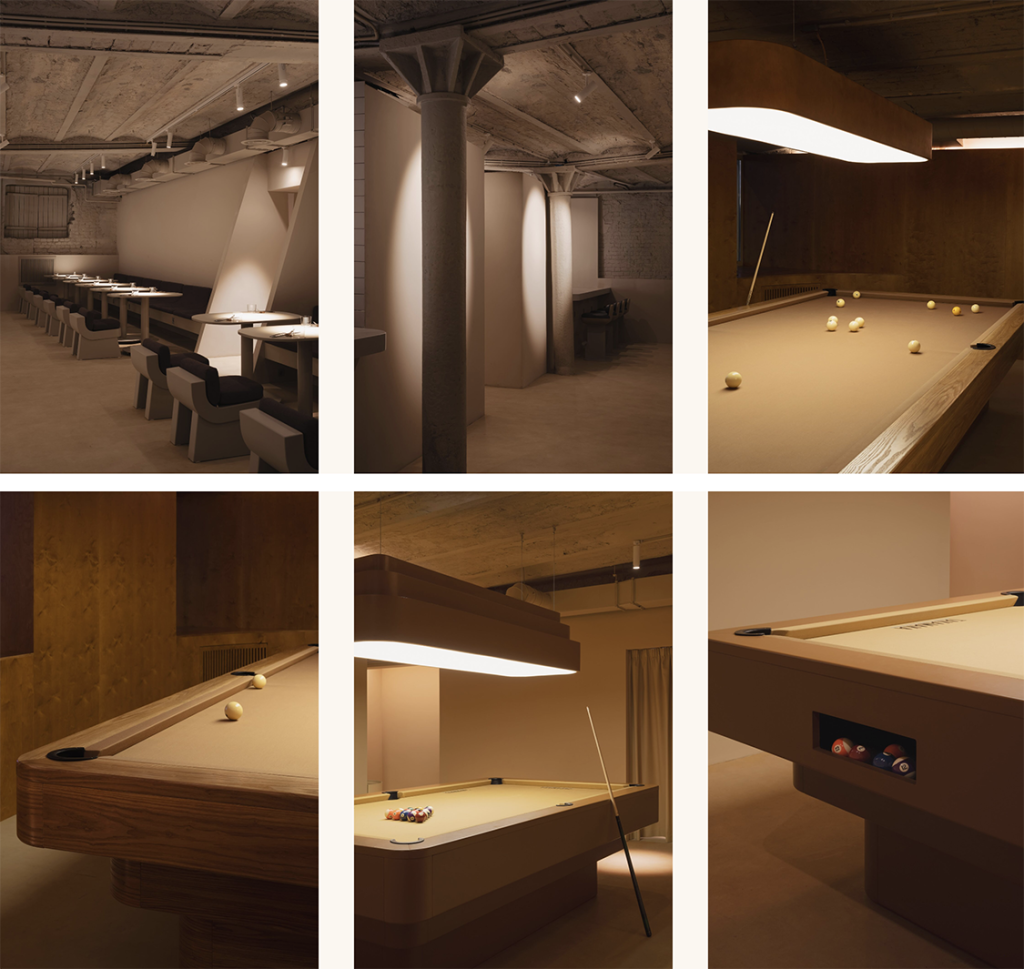
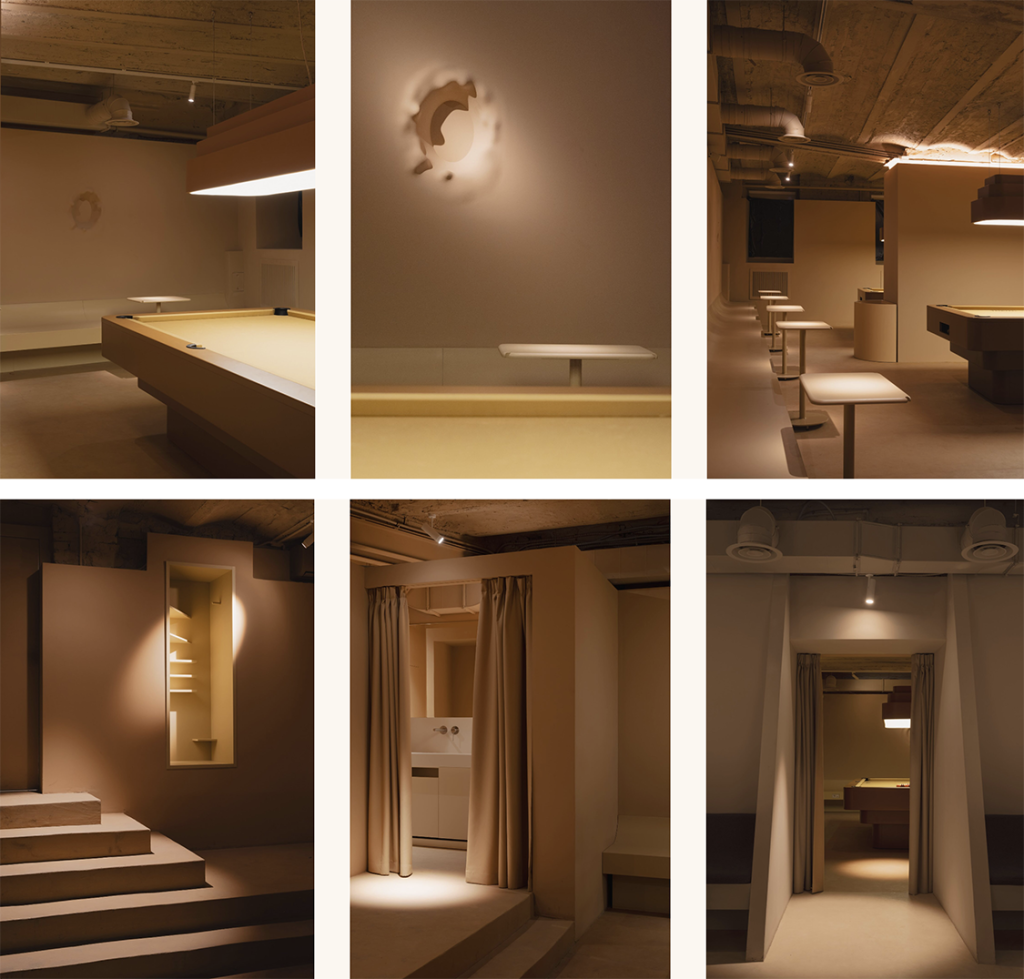
“Historical architectural elements from the past combine with a minimalist and futuristic interior,” he explains, “creating a unique dialogue between eras.” Four rooms, each with its own character, are united by a shared philosophy: minimalism, futurism, and what Aygunyan calls “playfulness.” The restraint is the statement. Every surface, every shadow, every sightline feels considered. This is the kind of interior that makes you want to stay longer than you planned.
The main hall: hypnagogia in detail
The largest of the four rooms holds three tables and is what Aygunyan calls “hypnagogia in detail.” The walls are finished in the colour of corrugated cardboard, and portals are cut into them, functioning as frames for art. “These elements transport guests into a borderline state between sleep and wakefulness,” he says. “Three geometric forms gradually dissolve, creating a sense of movement and transformation, like a dream in hypnagogia. This is a room where every game of billiards becomes a journey into a world where reality and fantasy intertwine.” It is, in short, the room that convinces you this place is different before you’ve even picked up a cue.
The gastro room: colour belongs to the food
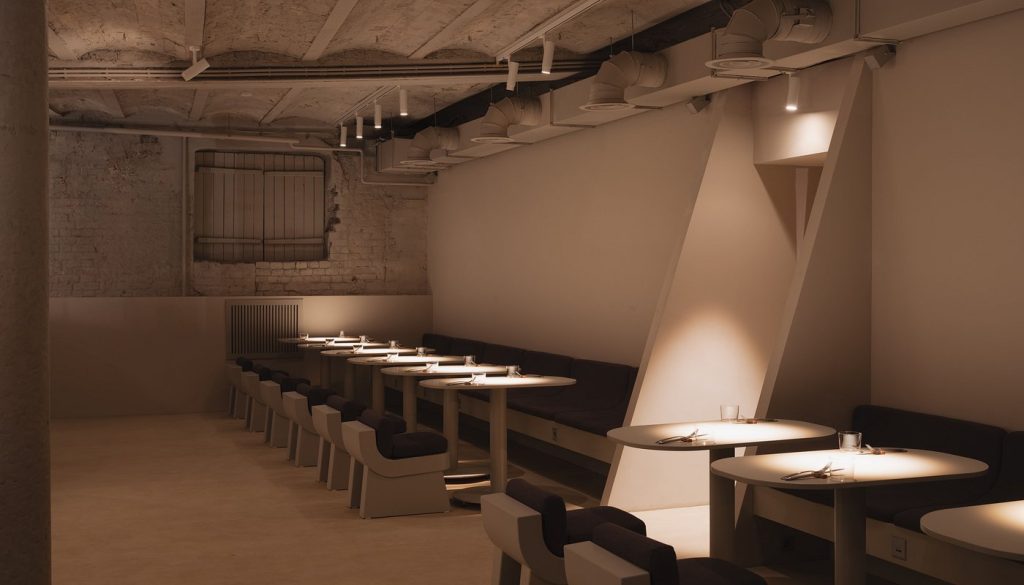
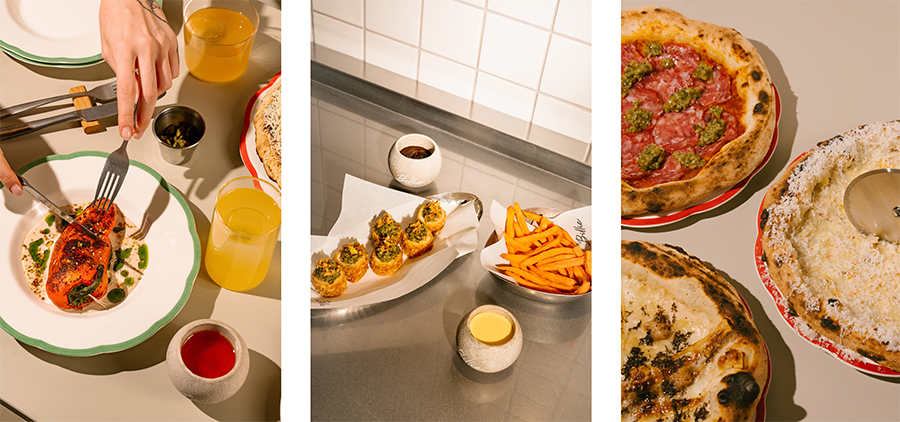
The second room exists as a backdrop rather than a statement. Monochrome grey throughout, it places the emphasis squarely on what arrives at the table. Food and drinks become the only bearers of colour in the space, which is either an extremely clever piece of design thinking or an extraordinarily confident one. Possibly both. Chef Artem Chudnenko’s menu reads as “sexy junk food” and means it: the kind of cooking that knows exactly what it is and does it very well. A smash burger that regulars return for specifically. Cocktails that are taken seriously. A room designed so that your attention goes nowhere except to the people across from you and whatever is in front of you.
The pool room: a three-legged thing
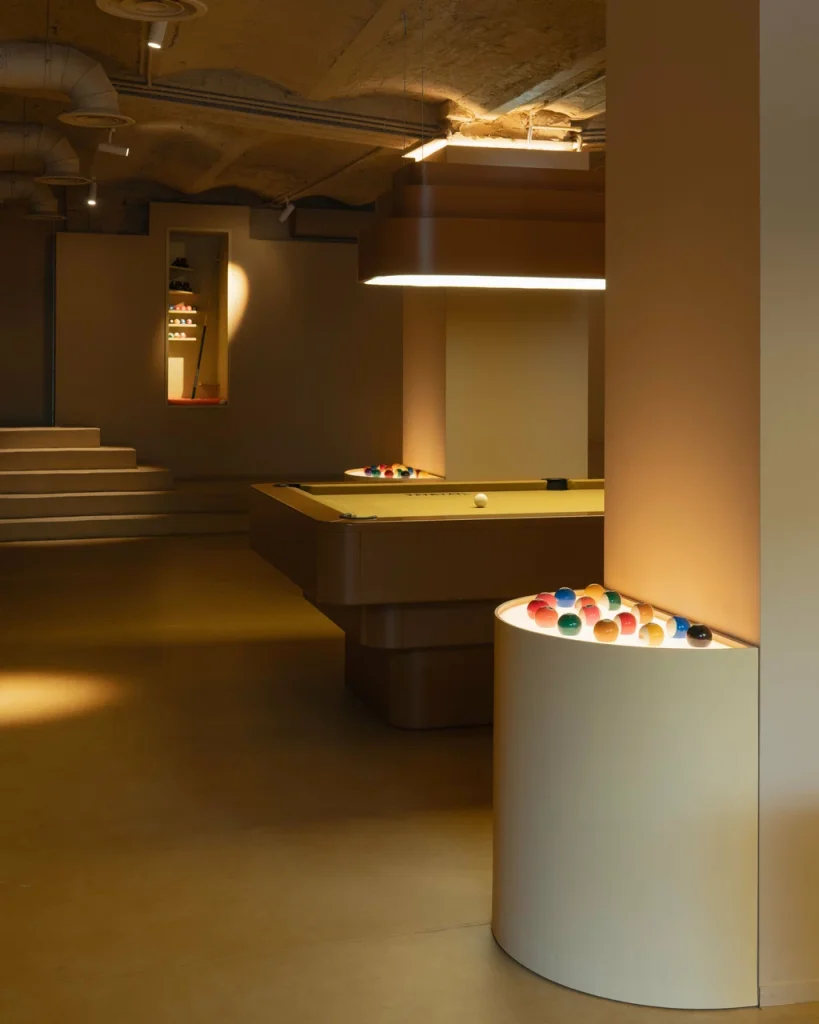
The third room centres on a single pool table with an unusual three-legged base, a deliberate departure from the standard that signals Billie’s broader attitude to the familiar. Nothing here arrives exactly as expected. The non-standard approach to a classic game is the point: billiards as object, as conversation starter, as something worth looking at even when nobody is playing.
The Russian billiards room: where time slows down
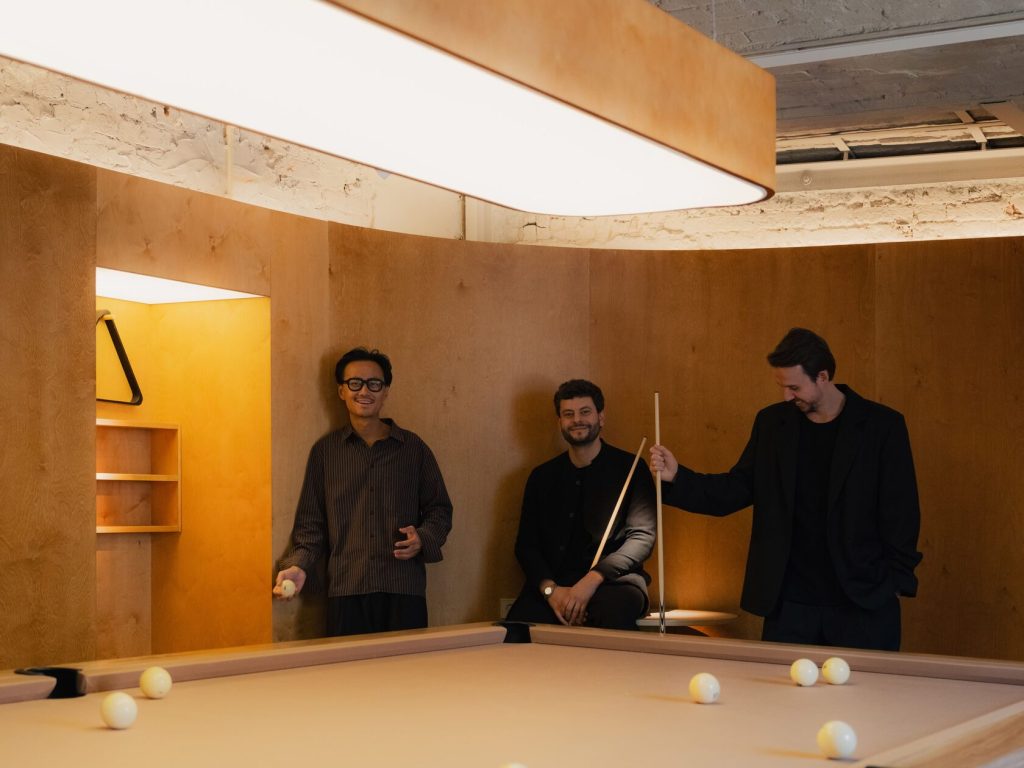
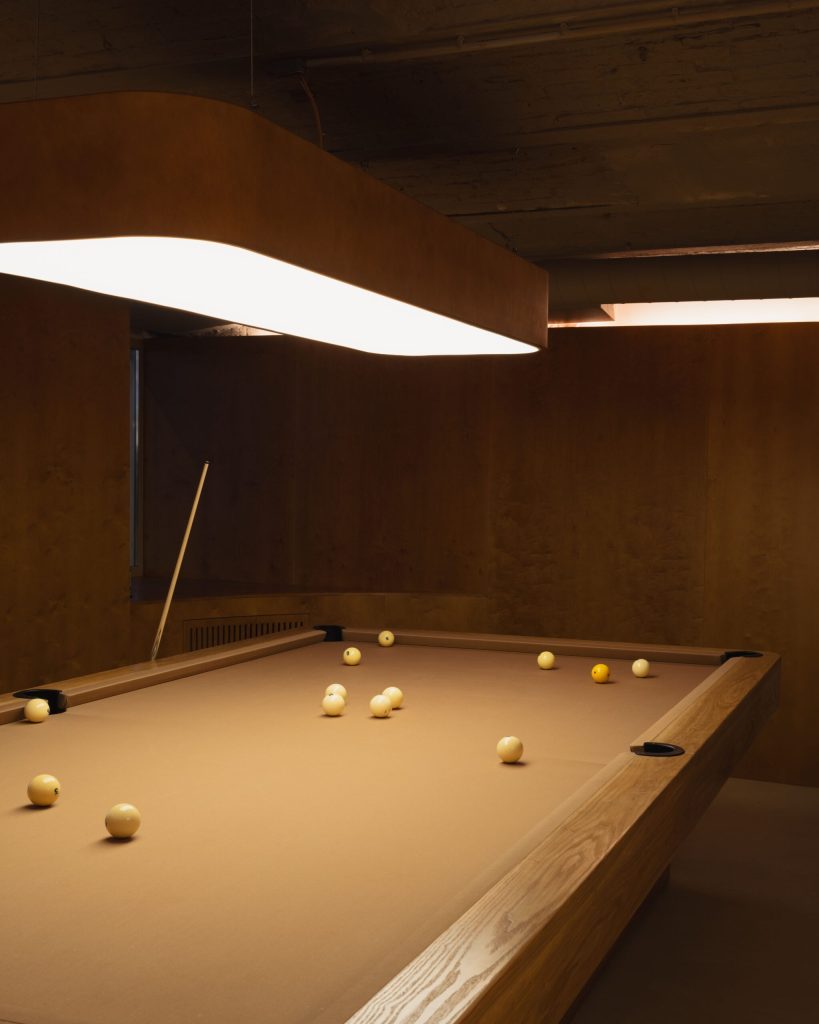
The fourth room is given over to Russian billiards and built in wood, a material Aygunyan describes as a reference to “the origins of billiards, while remaining within the framework of contemporary minimalism.” Wooden wall panels and a solid oak table with a hanging lamp create an atmosphere that is warmer and more deliberately nostalgic than the other three rooms. “This is a place for those who value tradition,” he says, “and want to enjoy the game in an atmosphere where time seems to stop.” It is the room that will hold you longest.
The crowd at Billie skews young, design-literate, and well-dressed. People who know the difference between a well-made Negroni and a gun-tap pour, and who understand that how you spend an evening says something about you. On weekends, a professional coach is available for those who actually want to improve their game. The rest are there for the ritual: the slow arc of the shot, the sound of the break, the conversation that happens in between.
Billie sits in natural relationship with Soma, the founders’ restaurant a short distance away. “People can start their evening in one space and continue it in another, changing the rhythm and the mood,” Oleg explains. “Soma is about gastronomy, dinners, the atmosphere of relaxed conversation. Billie is about dynamism, the game, and junk food. It’s a natural story, because both projects are united by the same philosophy: style, emotion, attention to detail, and atmosphere.” Two rooms, one city, one way of thinking about what a night out should feel like.
Moscow has no shortage of billiard clubs. The city has a long, serious relationship with the game. But places that understand billiards as atmosphere, as a vehicle for an evening rather than just a competition, are considerably rarer. Billie has understood this from the start. “The restaurant industry in Moscow has become too predictable,” Oleg says, “with many concepts resembling one another. We offer an old-new view of leisure.” Aygunyan’s dialogue between centuries, between the Pegov family’s 19th-century walls and something that looks like nothing else in the city, is not incidental to that ambition. It is the argument, made in material form.
The address alone is compelling. Neglinnaya Street sits at the intersection of old Moscow and the city’s restless present. Tsvetnoy Bulvar is steps away, Trubnaya metro is a short walk, and the density of the centre presses in from all sides. The kind of location that already has energy before you step through the door. – Bill Tikos
Address: Billie – Neglinnaya Street, 29с1, Moscow