

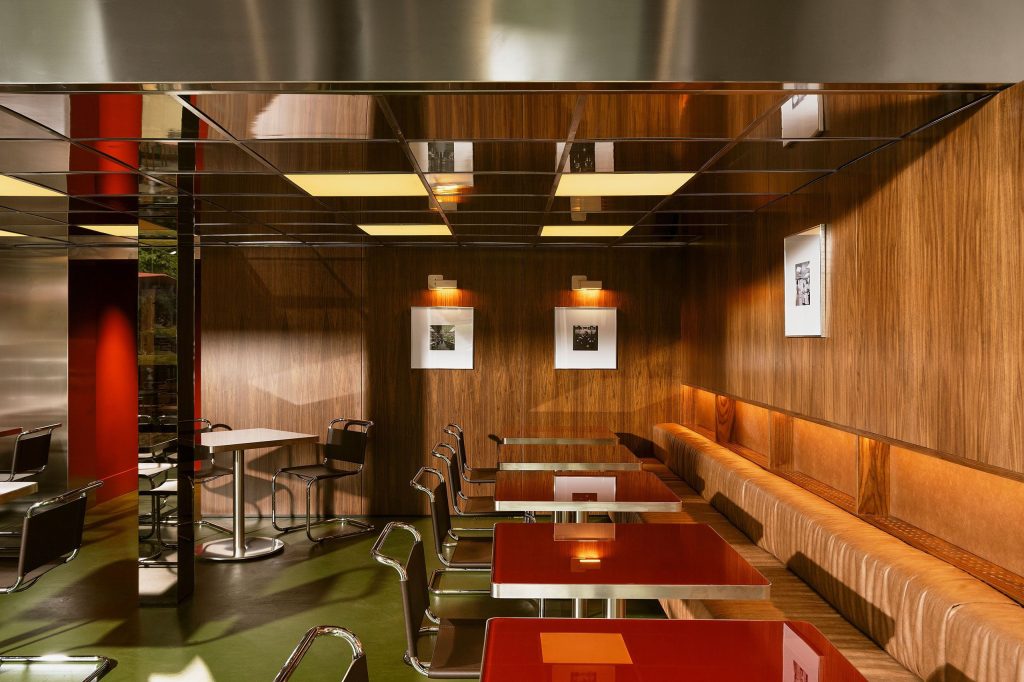
There is a particular decade when offices stopped looking like offices and started looking like something else entirely. The 1960s brought Space Age materials, saturated colour, fluid floor plans and a new conviction that the environments where people worked could be as thoughtfully designed as the products they made. Chrome and walnut replaced institutional grey. Cantilevered chairs replaced the rigid desk-and-chair binary. The workplace became a stage.
Turin-based designer Fabio Fantolino looked at all of that and saw a cocktail bar. The result, Leve Office Bar, is one of the most considered hospitality interiors to open in Italy this year — a three-level space in the city centre that translates mid-century office vernacular into a setting that feels cinematic rather than costume-heavy. “Chrome, walnut and deep red enamel: the palette of a forward-looking 1960s boardroom, now pressed into service after dark.”
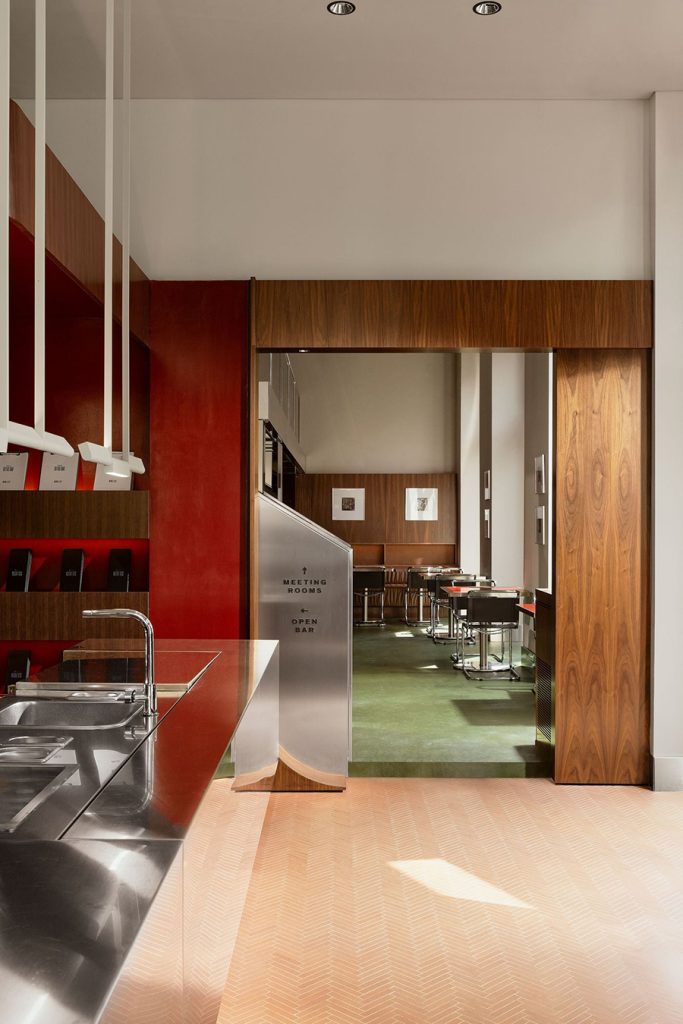
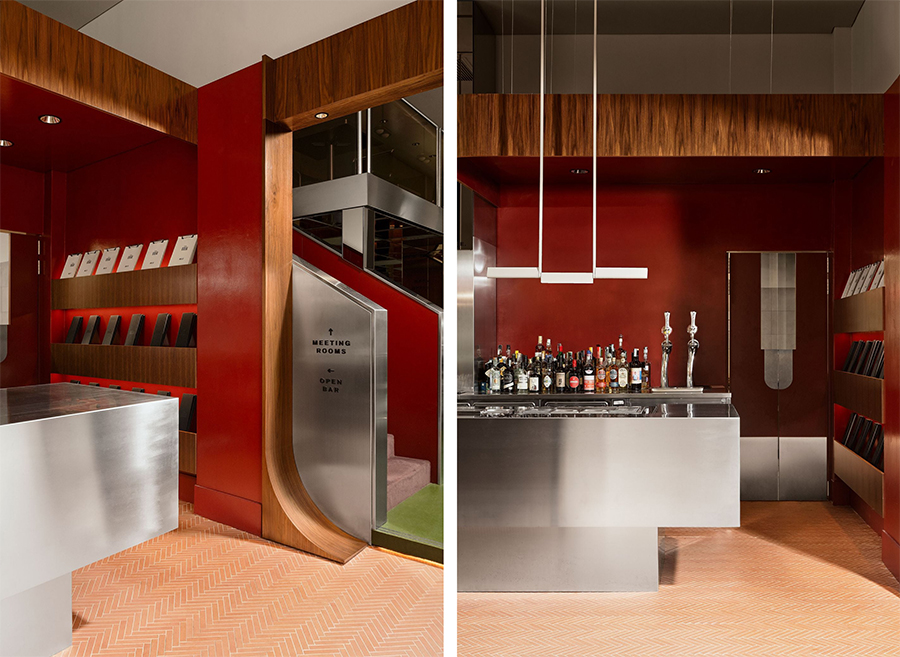
The ground floor sets the material logic of the whole project. A long stainless-steel counter runs through the first space, monolithic and precise, backed by a wall in deep red enamel that gives the room an immediate cinematic warmth. Underfoot, a herringbone floor in earthy brick tones softens the industrial cool of all that steel. Lighting is modulated carefully — reflective surfaces shift throughout the day, and after dark the room settles into a quiet, subdued glow.
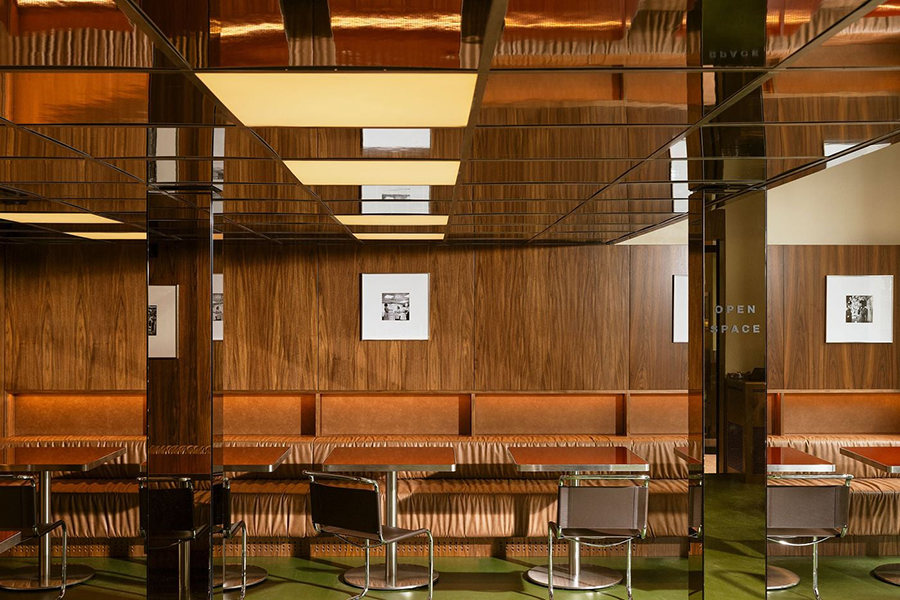
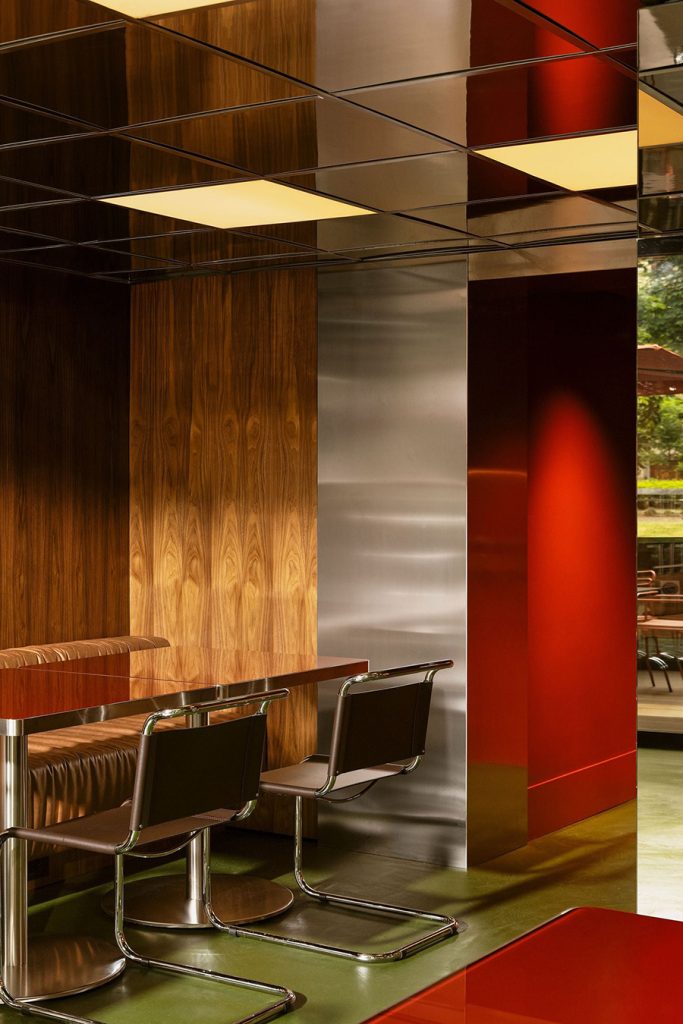
Move through and the register shifts. The double-height second space leans harder into the visual codes of the era: stainless steel and chrome in dialogue with walnut panelling and bronze leather upholstery, a composition that manages to feel both controlled and genuinely inviting. The avocado-green resin floor is the room’s most decisive gesture — a continuous colour field that reads as boldly now as it would have in 1967, against which red enamel tabletops make a vivid, unapologetic counterpoint.
The furniture selection is exact. Mart Stam’s S33 cantilevered chair — a Bauhaus icon from 1926 that reached peak cultural visibility in the offices and interiors of the 1960s — appears throughout in chrome and black leather. A continuous wall banquette runs in gathered bronze leather. Overhead, a gridded mirror ceiling fragments and multiplies the room, dissolving boundaries and amplifying the amber warmth of embedded light panels. The smoked mirror panels pick up everything and send it back transformed.
Upstairs, the mezzanine level draws on the open-plan typologies that were reshaping American and European offices during the same decade. Booth seating is divided by soft partitions in mustard yellow and tobacco bouclé — modular and softly architectural, evoking the workstation clusters that were beginning to replace the closed private office. Retro pendant lamps with opaline glass shades hang above walnut boiserie. The floor here turns to deep carpet, making the mezzanine feel warmer and more intimate than the levels below, an upper floor with the register of a well-appointed executive suite rather than a trading floor.
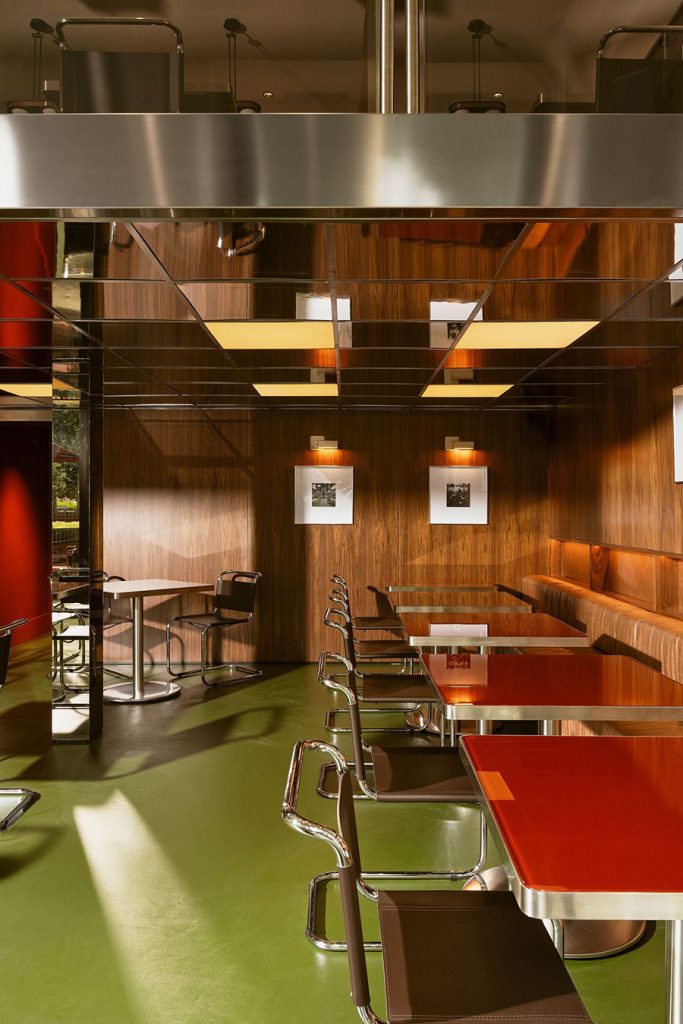
What Fantolino has pulled off at Leve Office Bar is subtler than a retro fit-out. By reaching back to a moment when workplace design itself became experimental and human-centred — when the office started asking the same questions about comfort, atmosphere and social choreography that a great bar asks today — he draws an unexpected line between two typologies that turn out to share the same underlying ambition. How do you design a space that makes people want to be in it?
Project: Leve Office Bar
Location: Turin, Italy
Design: Fabio Fantolino
Photography: Luca Argenton